
One of my biggest challenges is knowing when to stop researching and start writing. I love digging into archives and documents, piecing the evidence together, and crafting the stories that emerge – but it can be so tempting to keep digging in the hope that I’ll find just one more will, one more map, one more thread to pull or ghost to chase … But history is made to be shared, and part of my motivation in beginning this one-place study was to create a space for writing up and sharing the stories I find about Oldnall End, its farms and footpaths, and the people who’ve lived here.
The parameters I’ve set for the project are shaped by Oldnall End’s peculiar status. By the 19th century, it was really just a memory of a place, glimpsed in land and property records and sales, rather than a fully realised place in its own right. Because of this, I’ve structured the project around properties rather than people – or rather, the people are drawn in as they interact with the properties. Beginning with the Tithe Apportionment of 1839, which irrevocably links farms and fields with their owners and occupiers, I’m working backwards in time through the 19th, 18th, 17th and even 16th centuries, hoping that eventually a more tangible Oldnall End will emerge from the fragments.


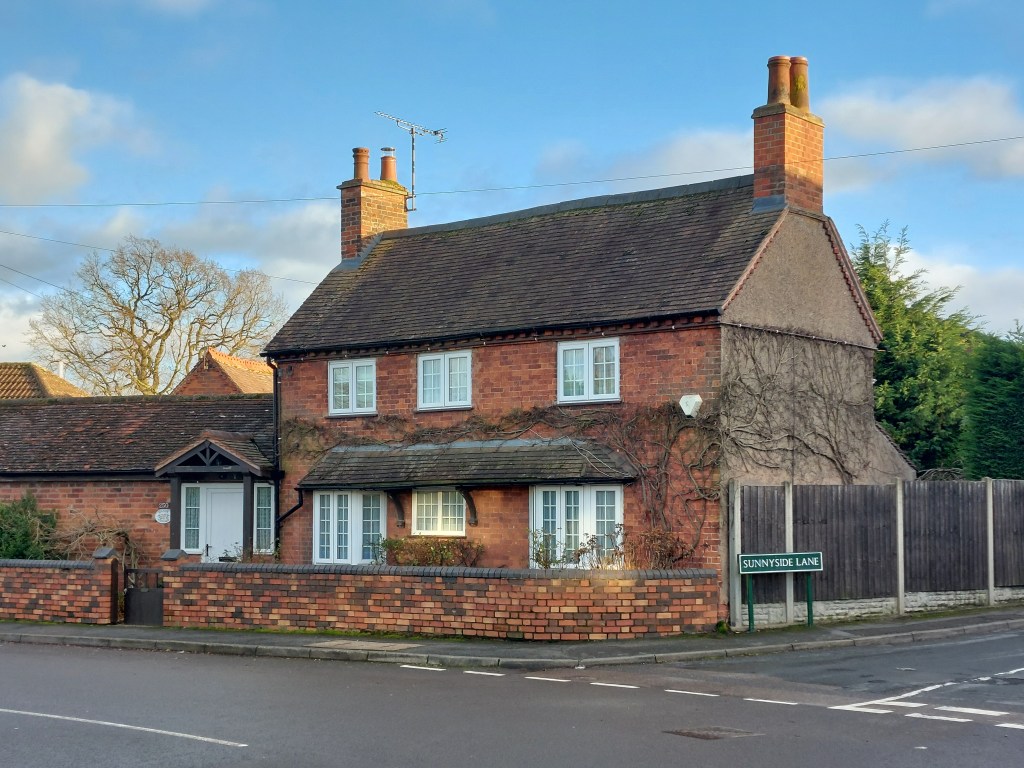
All of this is by way of introducing a new phase of the project: house histories. I shared my love of house histories in my last blog and introduced the first dedicated house page, for Manor Cottage on Station Road (formerly Dockers Lane). Eventually I plan to have a dedicated page for every property that stood in Oldnall End before 1839. I’ve been pondering the best way to shape these pages, above all how to strike a balance between the data on the one hand, and the story on the other. How can I bring a house’s history to life without suffocating it in pedantry and data (two of my favourite things, I am nothing inf not an antiquarian manquée), while making sure a reader can always follow my evidence back to the source?
In the new pages, for Cherry Tree Cottage on Station Road (sometimes Truggist Lane) and Moat Cottage on Truggist Lane, I’ve tried out slightly different ways of presenting and balancing data, notes, footnotes and commentary. The biggest difference I’ve found, at least in the quantity of data, is between copyhold and freehold property. For a copyhold property like Moat Cottage or Manor Cottage prolific evidence is available of sales and inheritance via the manorial court rolls, whereas for a freehold property like Cherry Tree Cottage, the primary sources – at least before newspapers began to print sales advertisements – will be wills and inventories, where you cross your fingers and hope the testator includes information about when he or she acquired their house, and from whom.
And of course, no story like this is complete. Where I’ve drawn on hypotheses – for example, where documents are missing or identities ambiguous – I’ve tried to be open and explain my reasoning. Does it work? You tell me! I’ll keep refining the process, tweaking the presentation, and – of course! – looking for that missing evidence. I’ll be rolling out more house histories in the next few weeks, so watch this space!
 Oldnall End One Place Study
[…] Road which we know today as the Brickmakers’ Arms, or the Brickies. It’s part of my project to produce a brief history and chronology of every property in Oldnall End, although I’m swiftly learning that some are MUCH easier to track than others! This is […]
LikeLike
[…] that draws together archival evidence, the material world and imagination. I learned this mostly by forcing myself to know when to stop researching and start writing! I also learned that it is in fact possible to write a house history in less than 20,000 words. So […]
LikeLike